join us    |   sign in    |   contact us

NRWC Employer Engagement Specialist Certification Open for Enrollment

We are pleased to announce that the NRWC Employer Engagement Specialist Certification program has launched!

Recognizing the shifting landscape affecting reentry workforce programs and opportunities for justice-impacted job seekers, this certification focuses on best practices to help professionals in one area where they can have consistent impact—how they engage with employers. It also includes four original frameworks as well as, templates, guides, and other resources  to support learning throughout the program with real-life applicability beyond the course.

We are grateful for the input from our community to help us design this certification, assistance from community members to test the pilot, and the generosity of the T.D. Jakes Foundation in supporting program enrollment.

To learn more about how you can become an NRWC-certified Employer Engagement Specialist, visit the certification program page.

Why Employer Engagement is the Keystone of Reentry Work

If you’ve been feeling the ground shift under your program recently, you’re not alone. The labor market is in persistent flux, which means what you’re experiencing probably doesn’t even look the same as it did last quarter. For reentry workforce professionals, this volatility means a change in thinking about what the recruitment-to-hire process looks like.

Navigating a hard-to-read job market

Economists call the current environment “low-fire, low-hire.” Instead of mass layoffs or rapid replacements, many employers are being more deliberate in their retention and recruitment efforts. For the latter, that often translates to longer application-to-hire cycles.

This kind of caution is arguably harder for job seekers to work with than a downturn, because there’s no clear signal telling them what to do differently. The need (and thus the timeline for recruitment) also varies wildly across professions. It would seem the current advantage lies with employers.

However, the LinkedIn Talent Research 2026 highlights how job openings have roughly doubled since 2022, yet employers report unprecedented difficulty filling positions. According to National University’s 2026 hiring statistics analysis, 53% of employers say verifying skills is their main obstacle. That’s a symptom of another shift, away from a focus on degrees, titles, and accolades to prioritizing versatility and adaptable experiences.

Giving employers what they’re looking for

Among employers surveyed by the National Association of Colleges and Employers for its 2026 Job Outlook, 70% report using skills-based hiring. That’s up from 65% the year before. And 71% of those employers use a skills-forward approach at least half the time. 

That’s a favorable opening for justice-impacted job seekers, whose transferable skills, work history, and lived competencies may not have read as easily on a traditional resume. Even as employers cite skilled-labor shortages, retention challenges, and a widening mismatch between the roles they need filled and the workers available to fill them, there’s a talent pool waiting to be (re)discovered. 

And discovery is largely about positioning. Many employers are investing in upskilling, building longer-term pipelines rather than one-off postings, and prioritizing clear, consistent communication with candidates and staffing partners. Those are behaviors rooted in, and impossible without, sound relationship-building.

The AI question everyone is wrestling with

Yet no conversation about the nature of work in 2026 can exclude AI. Globally, 40% of workers now fear that AI will make their job obsolete, up from 28% just two years ago and in the U.S., that concern runs even higher (Mercer Global Talent Trends 2026 survey). 

Much like the market in general, however, the only AI constant is inconsistency. The Economist recently touted an “AI jobs boom,” even as hiring lulls are attributed in large part to AI uncertainty. The Wall Street Journal reported a hot job market for workers without college degrees, even as experts predict AI will nullify many non-degree roles in office environments.

For reentry professionals, this matters in two ways. First, it means the repetitive or task-heavy roles that have historically been common entry points for justice-impacted job seekers may shift in scope or number over time. This underscores the need to build relationships with employers across a wider range of sectors and skill levels. 

Second, it means employers themselves may be as anxious and uncertain as job seekers about what’s next. This can make employers more receptive, not less, to workforce partners who can bring clarity with vetted, supported candidates who reduce onboarding risk by meeting current as well as perceived future needs. 

Stronger employer relationships are imperative

None of this— selective caution, skills-based hiring, AI disruption— resolves itself through a stronger resume or a better interview coaching session alone. Instead, it’s about employers who trust that you understand their big-picture priorities, can bring candidates ready, willing, and able to help boost their company’s bottom line, and are committed to successful placements defined by sustainability for both employer and employee.

That’s why employer engagement should be viewed as a core professional skill for reentry workforce. In its two-day FutureWorks conference earlier this month, Indeed.com showcased hiring managers and employers who, despite the potential inherent in AI, uniformly lauded “the human advantage.” 

How does that look? It’s personal and relatable. It’s cultivating regular contact and open conversations. It’s recognizing how stronger employer relationships expand what your program can offer: more openings, more flexibility, more willingness on the part of employers to actively partner with you, rely on you, trust you as a valued member of their team.

The opportunities in the future of work lie in the gap between quantity and quality—the fine-for-now versus the long-term right fit. Knowing how to seize those opportunities to engage and encourage employers is a significant part of your role as a broker of trust. Instead of trying to keep pace, you can work with employers to set a pace that works for them and for justice-impacted job seekers so that together you’re helping meet needs now and well into the future.

NRWC conducts onsite Employer Engagement Training sessions and is now launching an Employer Engagement Specialist Certification. 

Future of Work: Career Durability in a Changing Labor Market

At the height of the COVID-19 pandemic, experts asserted that change is the new normal. While some people embraced the idea of persistent novelty, others wished for things to “go back” to how they were. 

There’s an old saying: “The more things change, the more they stay the same.” Does this idea still hold up if “the same” now equals constant change, and at an accelerated rate? In fact, how can anything remain, when it seems like everything is in flux? 

The point of this saying is to focus on what’s at the core of the transformation. Shifting titles, labels, and categories are simply means to an end—the fundamentals behind them don’t change. For justice-impacted workers, that unchanging core goal is economic mobility. So how do you leverage change to achieve it?

Martec’s Law

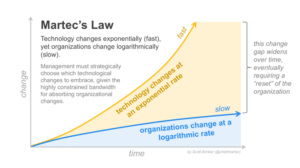
Normally when we think about change we envision infinite possibilities. Yet there are limits based on who or what is experiencing change. As Martec’s Law notes: Technology changes exponentially; organizations change logarithmically. 

Often technology is developed well before its potential use cases are mapped out. AI is a prime example of that, as it continually evolves and acquires new capabilities while individuals, employers, social standards, and legislation struggle to keep pace.

What does that mean for the reentry workforce field? For the most part, it means learning how to strategically weather disruption. We’ve seen wave after wave of labor market changes attributed to AI, yet some organizations have already begun reversing previous decisions and are re-hiring human labor.

The back-and-forth highlights the gap noted in Martec’s Law; the opportunities that exist in the uncertainty between where organizations are and where they could be. To ensure that justice-impacted job seekers are employable now and adaptable to advance with change, it helps to recognize and plan for the long-term possibilities.

Reexamining Need and Reallocating Labor

The challenge for modern job seekers isn’t a shortage of jobs; it’s a mismatch between where workers are and where the opportunities have moved. AI and automation may be eliminating routine task roles, but not roles requiring creativity, mental agility, and an indisputable human touch, like the skilled trades. For justice-impacted job seekers, this shift offers an opening if they can show employers they possess the desired skill set. 

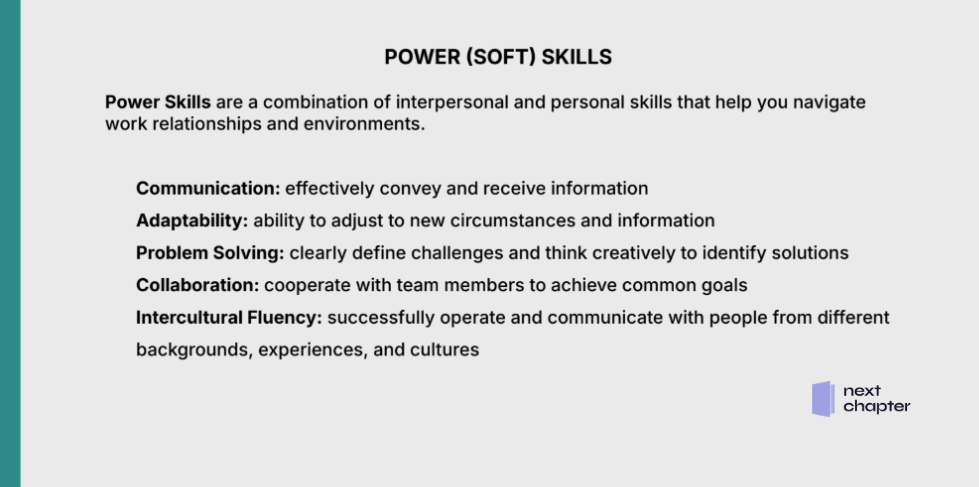
That too, is changing for the better. Job search platforms consistently report that employers are focusing less on candidates who can learn a specific process and more on candidates who can adapt quickly once they’re in the role. That means transferable “soft” skills that shorten the learning curve—leadership, communication and active listening, critical thinking and problem-solving, emotional intelligence, teamwork—are becoming the real currency of long-term employability.

In a LinkedIn survey, 90% of employers reported these so-called soft skills (more popularly referred to now as essential or power skills) to be as important as technical skills. Yet most of those same leaders reported difficulty finding hires who meet that need. Many of these skills are not easily learned through training; they’re inherent or accumulated across a variety of experiences. 

The task ahead for the reentry workforce field is to not only match job seekers based on interest, experience, and learned skills, but to translate a justice-impacted individual’s lived experience into language employers recognize as valuable. Sustainable employment with opportunities for advancement comes through connecting the full range of your job seeker’s capabilities to a labor market that’s reallocating talent to meet the quickly evolving needs of the future of work.

We invite you to view the recording our webinar: “Future of Work” Career Durability in a Changing Labor Market where you’ll hear from experts on how you can prepare justice-impacted individuals to productively navigate uncertainty for career durability and advancement.

Resources Shared by Our Speakers

Continue exploring the topics discussed during the webinar with these resources shared by our panelists.

Dean Craig – Business Services Director, Willamette Workforce Partnership

Kysha Wright Frazier – President & CEO, Corporation for a Skilled Workforce

Audrey Mickahail – SVP, Market Strategy & Solutions, Opportunity@Work

Future of Work: High-Potential Industries

In today’s dynamic labor market, being future-focused is an essential part of the equation for economic security.

The national unemployment rate in March was 4.3%. More than a quarter of those job seekers are long-term unemployed (defined by the
Bureau of Labor Statistics as individuals who have been jobless and actively seeking work for 27 consecutive weeks or more).

The numbers are even more significant for justice-impacted individuals. Studies indicate their unemployment rate is around five times the national average and joblessness (out of work and not actively looking) increases as long-term job prospects falter.

As you would expect, recruiters report that employers are looking for demonstrable skills, but they’re also prioritizing adaptability. Candidates who show a willingness and aptitude to adjust, learn, and transfer skills from other areas of their lives are an asset to teams hedging against tomorrow’s unknown challenges.

There’s no true form of “future proofing” when it comes to jobs. Yet focusing on high-potential industries—those positioned for growth, sustained demand, and workforce investment—can help ensure justice-impacted job seekers are not left behind in a market driven by rapidly changing technology and employer expectations.

Where the Jobs Are: AI Influence

AI has been hailed as the beginning of the next stage of workplace evolution with both positive and negative implications. Some estimates suggest that over the next two to three years as many as 50–55% of U.S. jobs will be reshaped by AI.

The World Economic Forum’s Future of Jobs Report indicates 86% of businesses believe AI will have a transformative impact by 2030.

This means that not only is the future of work drawing closer, preparing justice-impacted job seekers to meet it means addressing skill or knowledge gaps to accommodate an increasing reliance on (or at least relation to) AI.

According to CNBC, technical demand is booming as a result of both AI’s influence and the proliferation of data centers. For example, since 2022 demand for robotic technicians has increased 107%, HVAC engineers 67%, and industrial automation technicians 51%.

Where the Jobs Are: Skilled Trades

But not all high-potential industry needs center around technology. The same CNBC data indicates opportunities for skilled trade jobs have increased by 27%.

The U.S. is experiencing acute shortages in workers in manufacturing (1.9 million by 2033) and construction (349,000 this year), with electricians, plumbers, and welders also in high demand.

The talent pipeline for trade careers is dwindling, with fewer young people being trained in these fields and little to no ability to outsource or automate these roles. Salaries are increasing accordingly, making skilled trades a great pathway for both economic mobility and stability.

It is important to note that it’s not an either-or proposition. Given that agility may be the best predictor of success in the future of work, prospective employees who can pair trade skills with basic technology fluency will be well positioned for long-term stability and advancement.

The Importance of Employer Engagement

None of this matters if reentry programs aren’t connected to real-time employer demand. Statistics and predictions are indicators, but they don’t reflect the individual realities of every community or the employers and justice-impacted individuals within those communities.

As a practitioner you already know the importance of nurturing relationships with employers. That’s why identifying high-potential industries, recognizing their overall needs, and understanding the qualifications particular employers are seeking is vital to planning and supporting participants through the job search process.

The labor market may seem increasingly competitive and uneven. But the demand for capable employees is there. The task is connecting talented people who need work with the type of work in need of that talent.

Join us on June 5 for the next webinar in our Future of Work Thought Leadership Series where experts will share how to identify industries positioned for long-term growth and align training and employer engagement strategies with labor market demand.

Second Chance Month in a Changing Economy: A Call to Lead in the Future of Work

By now you’ve probably received several reminders that April is Second Chance Month. It’s important to acknowledge not just the need for employment pathways for justice-impacted individuals, but the needs of the ecosystem that creates and supports those pathways.

Over the past twelve months, the reentry workforce field has experienced significant shifts. Changes at the federal level have reshaped priorities. Funding streams are evolving. Some employers who once considered fair chance hiring a primary commitment are broadening their focus to include other workforce strategies.

In addition, the labor market is changing rapidly, driven by technology, automation, and new expectations about skills and productivity. Economic and political uncertainty is creating additional volatility, leaving many in our field with a mix of questions and concerns:

  • Will opportunities for justice-impacted job seekers shrink?
  • Will fair chance hiring lose momentum?
  • How do we adapt without losing our mission?

These are real questions, but they are not new. The reentry workforce field has always operated in the tension between challenge and opportunity, and disruption is often part of the challenge that drives those opportunities. If we step back, we can see that the true need is for leadership, in thought and in action, that can help navigate the uncertainty.

A Shift in the Question

For years, much of our work has focused on access, helping justice-impacted individuals get a foot in the door. That work remains essential. But the future of work is pushing us to ask a deeper question:

How do we ensure that justice-impacted job seekers are not just accessing jobs, but are positioned to create value in a changing economy?

The reality is this:

  • The roles many of our job seekers rely on are being redefined or reduced.
  • Employers are increasingly emphasizing adaptability, productivity, and transferable skills.
  • Technology is accelerating the pace of change in ways that reward those who can learn and adjust quickly.

If we respond strategically to these shifts, we have an opportunity to shrink the gap between our pool of untapped talent and employer expectations and assumptions.

To address the second part of the question, we need to recognize and embrace our roles as leaders in shaping an evolved narrative about justice-impacted job seekers, proactively positioning their capabilities to show the potential for a positive impact on an employer’s bottom line.

Fair Chance Hiring and Future-Ready Talent

How does our shift in thinking translate into action? The goal is the same: getting everyone to “yes.” But in addition to viewing ourselves as field practitioners, we need to realize we are marketplace brokers.

On the surface that may seem like a step back rather than a leap forward. Our work is profoundly human and has a significant impact on real people’s lives. But brokering in this sense isn’t referring to impersonal transactions around jobs or human resources to fill those jobs. It’s about brokering trust.

As brokers of trust we:

  • Help employers say yes and experience ongoing success. That includes demonstrating how we can help them reduce costs and risks associated with recruitment, onboarding, and retention.
  • Help equip justice-impacted job seekers to feel confident in their worth. That includes facilitating skill-building that aligns with high-potential industries, adaptability for dynamic work environments, and habits to sustain employment and professional growth.
  • Serve as the junction of these two highly motivated groups. Our role is to not only connect them, but to translate their needs, worries, strengths, and areas of opportunity into a mutually beneficial success story.

Each of us actively shifting the narrative and the actions to support it, focusing on the economic viability of fair chance hiring, the competitive edge for employers who access a pool of untapped talent, and sustainability in how job seekers are prepared to respond to current and future challenges, is how together we continue to move the field and achieve economic mobility for justice-impacted job seekers.

A Community of Catalysts

If you are feeling the weight of this moment, you are not alone. While we recognize April as Second Chance Month, it is really an opportunity for us to champion the next stage in the lives of justice-impacted individuals.

How do we contribute most effectively to that change?

  • Remember that the field has always adapted, yet the mission has not changed. We have navigated policy changes, economic cycles, and shifting employer priorities before. If anything, economic shifts make our work more essential, not less.
  • Recognize that this is an opportunity to lead. The future of work conversation is happening, with or without us. The question is whether we will step in and help shape it.
  • Embrace our role as brokers of trust. Deepen partnerships with employers and equip justice-impacted job seekers for the realities of the labor market today and in the future.
  • Continue to serve as a steady voice in a time of change. Stand together as a community of changemakers, celebrate the progress we have made, and ensure that justice-impacted individuals can contribute meaningfully to building vital, economically sustainable communities.

This moment is another chapter, not the end of the story. We look forward to writing it with you.

Because the work continues. With each of us. For all of us.

Future of Work: Training for Productivity

During a recent webinar in the NRWC Thought Leadership Series, economist Jeffrey Korzenik described how economies grow in one of two ways: by expanding the labor force or by increasing productivity. The reentry workforce field has been focused, rightly, on labor force participation. Removing barriers, and opening doors to employment for justice-impacted job seekers has been essential work.

But the equation is changing.

Artificial intelligence and automation are reshaping how work gets done. Reductions in the migrant workforce are creating labor shortages as well as increased demand for automation. Employers are under increasing pressure to generate more value with limited resources. In this environment, increased access alone is not enough. The future of fair chance hiring depends not only on who gets hired, but on how prepared workers are to create value once they’re on the job.

What Productivity Actually Means (and Why It Matters)

According to the U.S. Bureau of Labor Statistics, labor productivity measures the amount of output produced per hour worked. In plain terms, productivity reflects:

  • The value a worker creates
  • The output generated per hour
  • A worker’s contribution to business outcomes

For employers, productivity is how they stay competitive. For workers, it shapes wages, advancement, and job security. And for fair chance hiring, productivity is the path to sustainability.

Fair chance hiring isn’t just about filling open roles. It’s about enabling workers, especially those historically excluded, to contribute meaningfully to an organization’s success. When justice-impacted job seekers are positioned as value creators, fair chance hiring becomes not only a moral imperative, but a business advantage.

The Risk of Ignoring Productivity

Across industries, employers are being asked to do more with fewer workers. Many companies have slowed hiring, implemented freezes, or reduced staff. At the same time, they’re investing heavily in automation and AI, and scrutinizing every dollar spent on training and talent development.

In this context, workers who are not prepared to adapt face real risks:

  • Being locked into low-wage, low-mobility roles
  • Being among the first displaced by technological change
  • Being overlooked as employers concentrate investment in roles that drive measurable returns

Fair chance hiring only works if opportunity lasts. When job seekers aren’t equipped to contribute, adapt, and grow in today’s labor market, access can fade quickly. Preparing people to create value is what makes fair chance hiring durable.

What “Training for Productivity” Looks Like in Reentry Workforce Programs

Training for productivity means expanding how we define work readiness. At a high level, productivity-focused training includes:

  • Digital and workplace literacy that reflects how work actually happens today
  • Problem-solving and adaptability, not just task execution
  • Understanding how technology supports work, from scheduling systems to data tools
  • Coaching participants to see themselves as value creators, not just job seekers

Artificial intelligence needs to intentionally fit into the conversation, not as a replacement for workers, but as a tool to increase productivity. When used responsibly, it can support learning, increase efficiency, and help workers navigate complex tasks. But it requires guidance, ethical guardrails, and a clear focus.

Introducing the 2026 NRWC Future of Work Series

Over the course of the year, we’ll explore how the reentry workforce field can prepare for the labor market we’re entering.

Each quarter, NRWC will dive deeper into:

  • High-Potential Industries
  • Career Durability in a Changing Labor Market
  • Employer Expectations in a Changing Labor Market

NRWC cannot predict the future. But together, we can help the reentry workforce field move from anxiety about the future of work to informed, proactive action.


Training for Productivity Post-Webinar Wrap-up

In the most recent webinar of our Future of Work series, Next Chapter Executive Director Kenyatta Leal and COO Tony Ochoa explored what labor productivity means in practical, employer relevant terms, why it matters for retention and advancement, and how workforce programs can embed adaptability and new technology into training.

If you were unable to attend or would like to reference the Next Chapter materials discussed during the webinar, you can:

Next Chapter also partners with reentry organizations to help address specific operational challenges or “pain points” using AI. To learn more, contact Tony at tony@nextchapterproject.org.

We encourage you to join our upcoming Thought Leadership Series sessions and engage with NRWC as a learning community committed to ensuring fair chance hiring remains viable and competitive in a changing labor market.

2025 State of the Reentry Workforce

The State of the Reentry Workforce report is the National Reentry Workforce Collaborative’s (NRWC) first annual effort to capture the current landscape of reentry workforce development across the United States. This year’s theme, Navigating Uncertainty in the Field, reflects the reality that providers are operating in an environment defined by rapid change, including shifting federal policies, evolving funding priorities, and disruptive new technologies. All of this impacts not just how organizations plan and deliver services, but also the opportunities available to people coming home from incarceration.

DOWNLOAD REPORT

The Rise of Background Checks and What Justice Impacted Job Seekers Need to Know

Over the past three decades, background checks have shifted from a niche practice to a near-universal part of hiring. Today, nearly 9 out of 10 employers report using them. While this trend was fueled by technology, policy, and employer liability concerns, it has also created new barriers for justice-involved job seekers.

The growth of digital records in the 1980s and 1990s, combined with “tough on crime” policies, made criminal history information easier to access and cheaper to use. By the 2000s, employers began relying on background screening much more broadly.

For individuals returning from incarceration, this shift has been devastating. Old arrests, dismissed charges, or records eligible for sealing can still appear and lead to rejection.

At the same time, we’re seeing important reforms. Ban the Box policies, record-sealing and expungement laws, and ongoing advocacy reflect a growing recognition that overreliance on background checks harms both workers and industries in need of talent.

In a recent webinar, the NRWC community heard from background check experts from Checkr and Rézme, who are working to demystify the process and educate the field on what rights justice-impacted job seekers have.

What Justice-Impacted Job Seekers Need to Know

Candidates Can Dispute Errors
Background checks are not always accurate. Reports can contain outdated records, mistaken identity, or incomplete information. Under the Fair Credit Reporting Act (FCRA), candidates have the right to review their background check results and challenge any inaccuracies.

Candidates Must Receive a Pre-Adverse Action Notice
If an employer plans to take negative action based on a background check, they are required to provide a pre-adverse action notice. Candidates then have the chance to correct errors or provide additional context before a final decision is made.

Record Relief Can Open Opportunities
Across many states, individuals may be eligible for expungement, record sealing, or reducing a felony to a misdemeanor. These legal remedies vary by jurisdiction, but they can make a real difference in opening doors to employment. Practitioners can play an important role by connecting participants with legal aid, state court resources, or tools like the National Inventory of Collateral Consequences of Conviction.

At a moment when background checks have become nearly universal, the difference between exclusion and opportunity for justice-involved job seekers often comes down to whether rights are honored, errors are corrected, and relief options are pursued. As a field, our responsibility is to ensure that background checks are not used as automatic barriers, but as part of a fair process that balances safety with equity. With knowledge and advocacy, we can move closer to a labor market where people are measured by their skills and potential and not just their past.

View our recent Thought Leadership series webinar:  Session Takeaway Behind the Background Check.

Soft Skills Are Essential Skills: Six Non-Negotiables for Career Success After Incarceration

Essential Skills for Justice-Impacted Job Seekers

When we talk about preparing justice-impacted job seekers for meaningful employment, the conversation often jumps to “hard skills” — those gained through technical training, leading to certifications and credentials. While these are critical, they’re only part of the equation. Too often overlooked are the competencies referred to as “soft skills,” which are just as essential for long-term success.

During a recent NRWC webinar, Jeffrey Abramowitz, CEO of the Petey Greene Program, called them what they truly are: “essential skills.”

These are the traits employers value most. They are the habits that build careers. And for employers like Pete Leonard, founder of I Have a Bean — a coffee company dedicated to hiring justice-impacted job seekers — they can be the difference that leads to transforming a life.

The Six Essentials

Through 15 years of experience, Mr. Leonard has identified six non-negotiable traits. These aren’t just preferences — they are baseline requirements for success in the workplace, particularly for individuals navigating the transition from incarceration to employment.

Dependability

Do what you say you will do.
This isn’t about perfect job performance or perfect attendance. It’s about follow-through. Whether it’s showing up on time for an interview or meeting a deadline, dependability creates the foundation for trust between employee and employer.

Honesty

Tell the truth about your story.
Employers value transparency. A job seeker who can clearly and candidly own their past and articulate what they’ve learned is often more trustworthy than a candidate with a clean record and a rehearsed script.

Agency

Take responsibility for your present and future.
Agency is about ownership. It means the job seeker, not a parent, case manager, or friend, is the one asking for the application, showing up prepared, and generally steering the process.

Teachability

Accept instruction without ego.
Most employers will say they can teach technical skills. What’s harder to teach is humility and openness to feedback. Teachability means being coachable, an indispensable trait in any workplace.

Engagement

Demonstrate curiosity and presence.
Engaged candidates research the company, ask questions, and show initiative. This signals not just interest in the role, but in growth. Engagement helps employers see potential, not just readiness.

Self-Actualization

Demonstrate identity transformation and conviction.
Employers want to know, “How do you know you’re not going back to prison?”
Self-actualization is about the individual recognizing they are no longer the person who was incarcerated. They live by new values and take new actions from a place of conviction. Employers look for candidates whose mindset, choices, and behavior reflect a new way of living from those that initially led to incarceration.

Why This Matters in Reentry Workforce Development

When reentry workforce practitioners build training programs that prioritize these competencies, they equip participants for more than employment — they prepare them for long-term advancement.

For employers, these traits are consistent predictors of workplace success. For practitioners, they provide a common language to coach, assess, and advocate for job seekers. And for job seekers, they offer a roadmap to transformation that starts with who you choose to be today.

View our Thought Leadership webinar Session Takeaway – Employer Perspectives on Education and Training

Reentry Workforce Programs Are Community Builders

Reentry Workforce Programs Are Community Builders

Reentry workforce programs do more than help individuals find jobs—they help communities grow stronger, safer, and more connected. For individuals returning from incarceration, employment is a stabilizing force. It lays the groundwork for family reunification, housing stability, and civic engagement. And when more people in a community are working, contributing, and connected to support systems, everyone benefits.

Stable employment is one of the most effective tools we have to reduce recidivism. Individuals who gain employment soon after release are significantly less likely to return to incarceration. But beyond reducing crime, steady work opens the door for people to reconnect with their communities as parents, neighbors, and contributors. These human connections are often the glue that holds a community together.

Below are stories from you, NRWC members, about how reentry workforce has made an impact in your communities:

From Hannah Smith, Exygy

In December 2023, our Growth team at Exygy partnered with CROP for a Fair Chance Hiring workshop. We showed up expecting to learn about inclusive hiring practices—and we did. But we also walked away with something much deeper: a real shift in perspective. What began as a session about equitable employment quickly became a conversation about resilience, dignity, and the brilliance that so often exists right within our communities yet remains overlooked.

That learning became action in April 2024, when we welcomed Noel Price, a CROP graduate, to our team as a Sales Development Representative. To say he hit the ground running would be an understatement. At Exygy, we build technology to remove barriers and foster healthier, more resilient communities. And bringing on team members like Noel—who carry lived experience, insight, and deep-rooted commitment to community well-being—feels like a natural (and necessary) extension of that mission. This isn’t about tokenism. It’s about ensuring the people most impacted by the challenges we’re working to solve are part of the conversation and, most importantly, part of the decision-making.

From day one, Noel brought clarity, calm, and dedication to a fast-paced role that demands both hustle and heart. Since joining, he’s helped drive over $1.2 million in submitted proposals and taught himself to build AI agents—automating parts of our proposal process and saving our team countless hours. But beyond the results, Noel shows up with grit, generosity, and a deep sense of purpose rooted in service. He reminds the Exygy community what it means to invest in tech for good and how powerful it is when someone steps into an opportunity with the full support of a community behind them.

Reentry workforce programs are doing more than building job pipelines—they’re building networks of belonging. They’re reconnecting people to opportunity, to dignity, and to each other. And I feel incredibly lucky to be a small part of that collective work.

If you want to hear the story in Noel’s own words—and trust me, you do—read his blog post: The Power of Second Chances. His voice is the one that matters most.

From Lori Stoudt, Connections Work

Harris Wilkinson’s journey is one of resilience, redemption, and the power of community. Facing hardships from an early age, his life took difficult turns, including a series of incarcerations that could have defined his future. But Harris refused to let his past be his only story. Determined to rebuild his life, he embraced change and sought a fresh start.

Harris found support through Connections Work and its “Work In Progress” workforce development program, which provided him with the tools, training, and confidence to rebuild his life. “When I first came to Connections Work, I had no ID, no Social Security card, no birth certificate—I felt like I didn’t exist. They gave me my identity back.” With our guidance and the unwavering encouragement of his family, Harris stepped into a new role that would unexpectedly transform his life: a crossing guard.

What seemed like a simple job became a meaningful calling. Every morning, Harris greets children with warmth, ensuring their safety and brightening their days. The gratitude he receives, whether in the form of a gifted pair of mittens, a hot coffee, or just a smile, reminds him that kindness is a two-way street. He has even found ways to give back, handing out hats and gloves to students in need.

In addition to landing a job he loves, Harris continues to take advantage of the services of our Digital Navigator. Harris has learned how to write and send professional emails, manage online finances, and install and manage apps on his phone. He is becoming more confident, is able to troubleshoot on his own, and feels more self-sufficient and resourceful when tackling digital challenges.

Harris’s journey hasn’t been easy—he still carries the weight of past struggles, including a brain surgery in his youth that made life more difficult—but today, he stands tall. He takes pride in the life he has built, one rooted in purpose, hard work, and connection. Every day, as he helps children safely cross the street, he knows he has also crossed into a future he once thought was out of reach.

From Jessie Ferguson, Goodwill Industries of Kentucky

Brooke endured an abusive relationship for 20 years, which resulted in her using drugs to cope. That ultimately led to her incarceration.

As she was preparing for her release, Brooke took part in a workshop for Goodwill Industries of Kentucky’s Aspire program, which provides incarcerated individuals within 90 days of release from prison with pre-release job training and supportive services. She was connected with Steven Sherwood, a Goodwill career coach, who guided her through barrier-removal services, job placement, career coaching, family reunification, and more holistic resources.

“Before meeting with Steven, I was up for parole, and I already felt defeated,” she said. “I knew what I was going back home to.”

When Brooke was released, she moved to Louisville to take part in the program. Originally from Dixon, Kentucky, which has a population of 900, she said she was scared to move but knew it was the opportunity she needed.

Brooke earned multiple professional certifications through the program, in addition to the knowledge she needed to rejoin the workforce. She was hired at the Northfield Goodwill store in Louisville, and after just six weeks, she was promoted to team lead. She recently accepted another promotion as a Goodwill career coach, which will allow her to help others who have similar challenges.

“It’s such a blessing to be able to pay it forward,” she said. “I know there are people out there just like me who feel like there’s no way out and want change so badly, but they don’t know where to get it. Aspire helped me overcome that, and I want to pay that forward.”

Brooke said she wouldn’t be where she is today without Steven, Chad Vaughn (senior store manager), and Ronrico Williams (career coach for the Northfield store).

“For the first time in my life, I feel like somebody has listened to me and helped me set goals and have been there with me, working toward them,” she said. “I just hope that I am able to do that for others.”

Loading...