During a recent webinar in the NRWC Thought Leadership Series, economist Jeffrey Korzenik described how economies grow in one of two ways: by expanding the labor force or by increasing productivity. The reentry workforce field has been focused, rightly, on labor force participation. Removing barriers, and opening doors to employment for justice-impacted job seekers has been essential work.
But the equation is changing.
Artificial intelligence and automation are reshaping how work gets done. Reductions in the migrant workforce are creating labor shortages as well as increased demand for automation. Employers are under increasing pressure to generate more value with limited resources. In this environment, increased access alone is not enough. The future of fair chance hiring depends not only on who gets hired, but on how prepared workers are to create value once they’re on the job.
What Productivity Actually Means (and Why It Matters)
According to the U.S. Bureau of Labor Statistics, labor productivity measures the amount of output produced per hour worked. In plain terms, productivity reflects:
- The value a worker creates
- The output generated per hour
- A worker’s contribution to business outcomes
For employers, productivity is how they stay competitive. For workers, it shapes wages, advancement, and job security. And for fair chance hiring, productivity is the path to sustainability.
Fair chance hiring isn’t just about filling open roles. It’s about enabling workers, especially those historically excluded, to contribute meaningfully to an organization’s success. When justice-impacted job seekers are positioned as value creators, fair chance hiring becomes not only a moral imperative, but a business advantage.
The Risk of Ignoring Productivity
Across industries, employers are being asked to do more with fewer workers. Many companies have slowed hiring, implemented freezes, or reduced staff. At the same time, they’re investing heavily in automation and AI, and scrutinizing every dollar spent on training and talent development.
In this context, workers who are not prepared to adapt face real risks:
- Being locked into low-wage, low-mobility roles
- Being among the first displaced by technological change
- Being overlooked as employers concentrate investment in roles that drive measurable returns
Fair chance hiring only works if opportunity lasts. When job seekers aren’t equipped to contribute, adapt, and grow in today’s labor market, access can fade quickly. Preparing people to create value is what makes fair chance hiring durable.
What “Training for Productivity” Looks Like in Reentry Workforce Programs
Training for productivity means expanding how we define work readiness. At a high level, productivity-focused training includes:
- Digital and workplace literacy that reflects how work actually happens today
- Problem-solving and adaptability, not just task execution
- Understanding how technology supports work, from scheduling systems to data tools
- Coaching participants to see themselves as value creators, not just job seekers
Artificial intelligence needs to intentionally fit into the conversation, not as a replacement for workers, but as a tool to increase productivity. When used responsibly, it can support learning, increase efficiency, and help workers navigate complex tasks. But it requires guidance, ethical guardrails, and a clear focus.
Introducing the 2026 NRWC Future of Work Series
Over the course of the year, we’ll explore how the reentry workforce field can prepare for the labor market we’re entering.
Each quarter, NRWC will dive deeper into:
- High-Potential Industries
- Career Durability in a Changing Labor Market
- Employer Expectations in a Changing Labor Market
NRWC cannot predict the future. But together, we can help the reentry workforce field move from anxiety about the future of work to informed, proactive action.
Training for Productivity Post-Webinar Wrap-up
In the most recent webinar of our Future of Work series, Next Chapter Executive Director Kenyatta Leal and COO Tony Ochoa explored what labor productivity means in practical, employer relevant terms, why it matters for retention and advancement, and how workforce programs can embed adaptability and new technology into training.
If you were unable to attend or would like to reference the Next Chapter materials discussed during the webinar, you can:
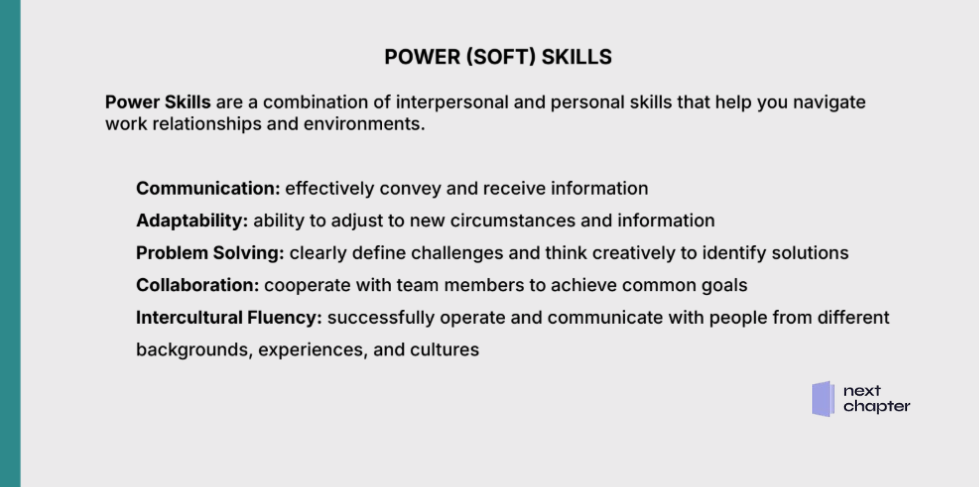
Next Chapter also partners with reentry organizations to help address specific operational challenges or “pain points” using AI. To learn more, contact Tony at tony@nextchapterproject.org.
We encourage you to join our upcoming Thought Leadership Series sessions and engage with NRWC as a learning community committed to ensuring fair chance hiring remains viable and competitive in a changing labor market.